
Air Quality
HEPA H13 + carbon with airtight, no-bypass flow.
Ceiling-integrated clean air, premium light, and silent comfort in one architectural unit.
HEPA H13 + carbon with airtight, no-bypass flow.
Halo LED ring, 120° diffusion, CRI > 90.
High-torque EC motor with anti-vibration mounting.
Wireless control for airflow, lighting modes, and comfort presets.
One monolithic ceiling form for air, light, and silence.
Bronze, black, and clean ceiling integration.
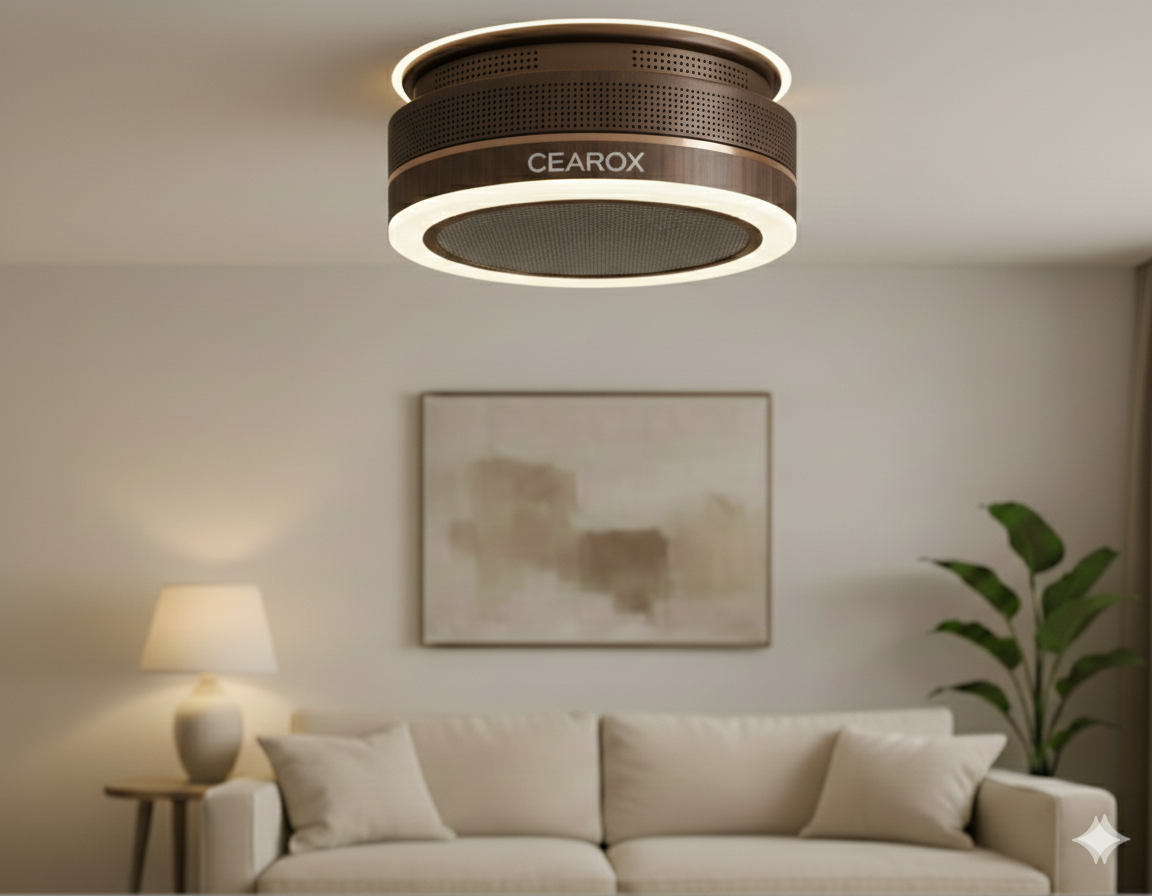
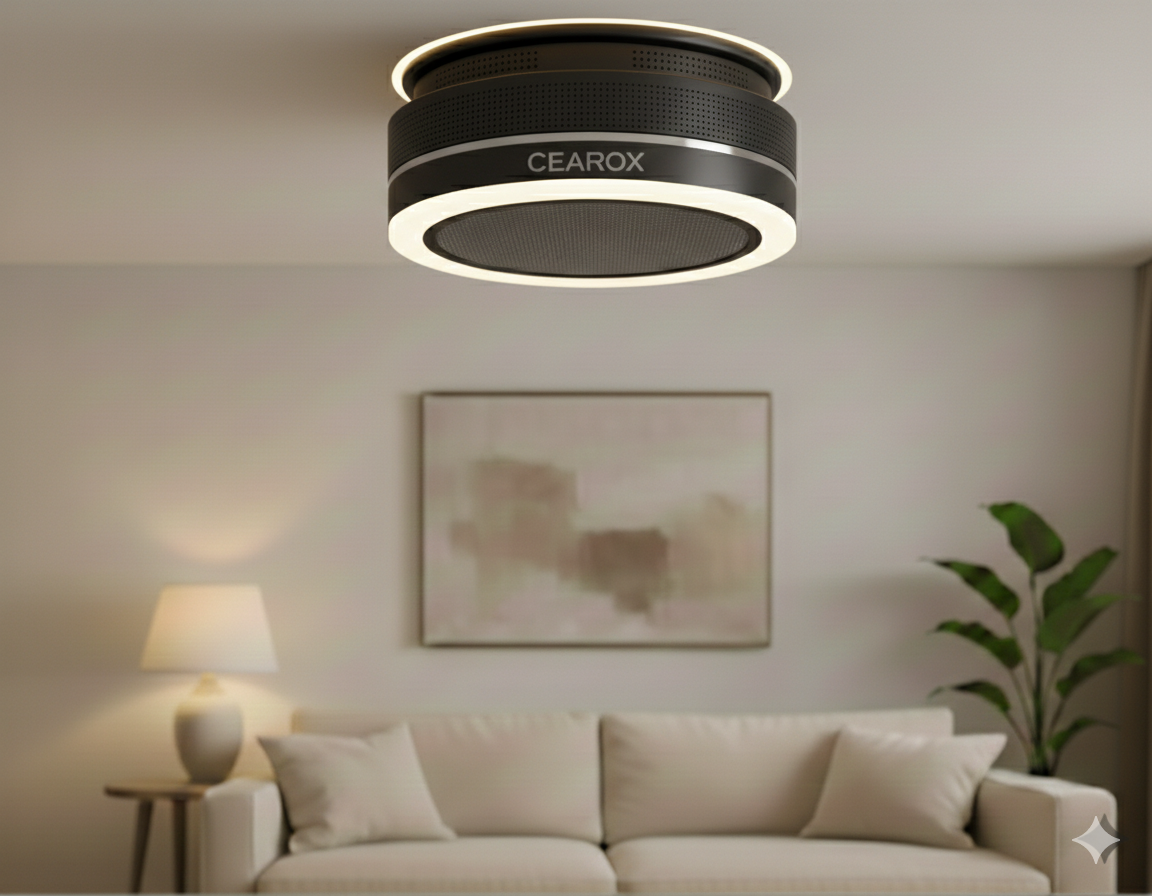
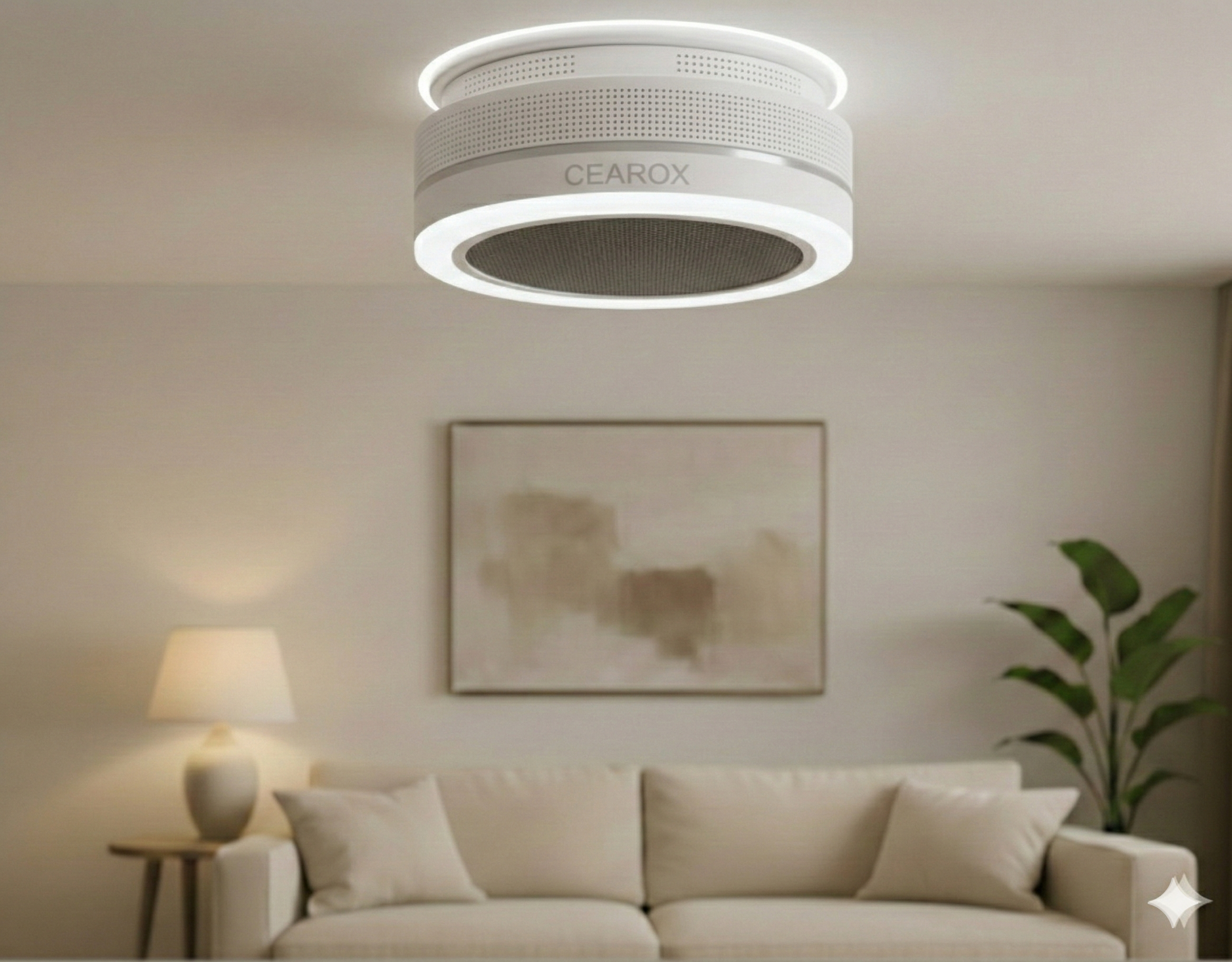
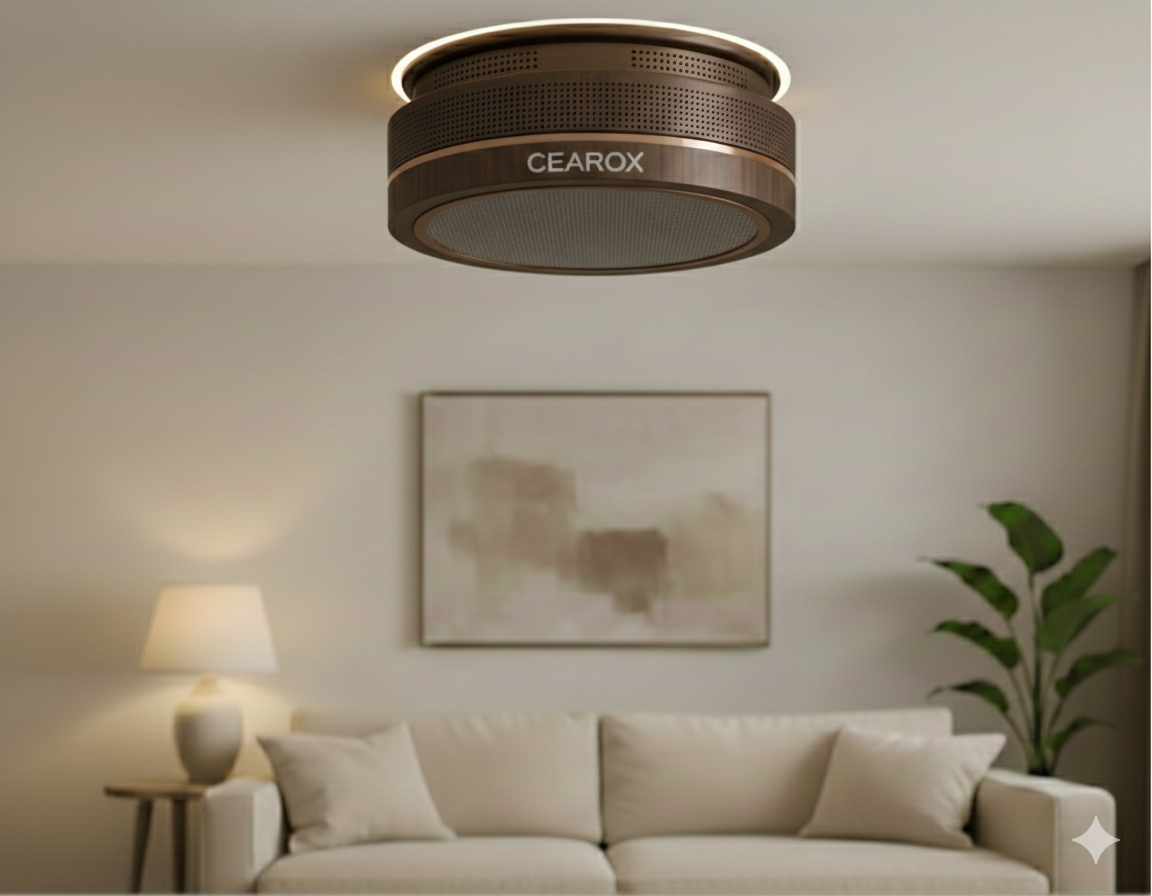
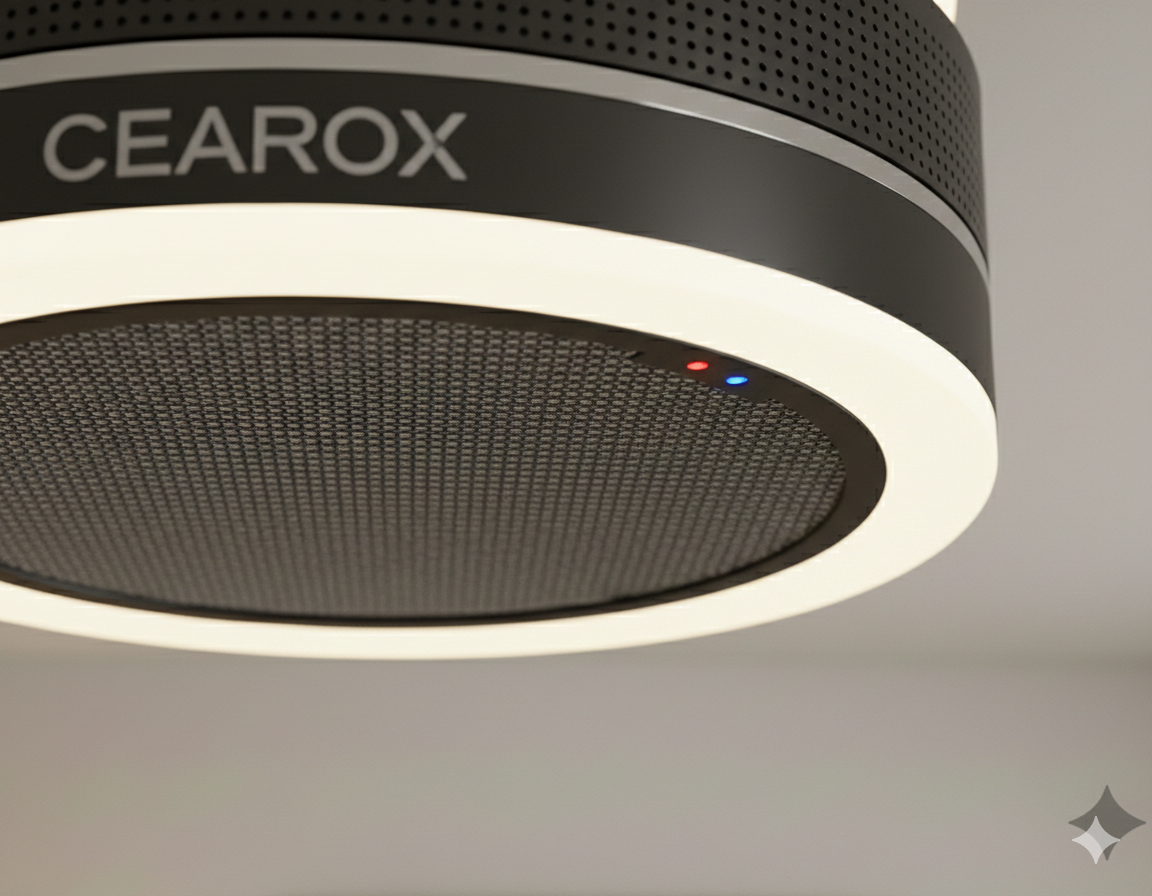
Residential elegance. Commercial coverage.
Indoor air quality is influenced by particles, gases, ventilation, room layout, occupancy and maintenance. A useful air-cleaning strategy starts by understanding what each technology can and cannot do.
HEPA filters are designed to capture airborne particles as air passes through the filter media. H13 is a high-efficiency classification commonly used where strong particle filtration is required. Performance in a real room also depends on airflow, sealing, filter condition and how often room air is moved through the device.
Read the HEPA H13 guide →Particle filters and carbon filters solve different problems. HEPA media targets suspended particles, while activated carbon is used to adsorb certain gases and odors. Combining the two can broaden the range of pollutants addressed, but neither replaces adequate ventilation where fresh air is required.
Learn about carbon filtration →An air purifier can only treat the air that reaches it. Furniture, walls, ceiling height, doors and room geometry all affect circulation. Ceiling-integrated placement can free floor space and support broad room circulation, but correct sizing still matters.
See the placement guide →CEAROX CX-PRO-580 combines HEPA H13 filtration, a carbon filter module, an EC motor, integrated LED lighting and wireless control in a ceiling-mounted form. The objective is to reduce floor footprint while keeping core air-cleaning functions in a central architectural location.
No purifier should be judged by a single component label alone. Filter grade, airflow path, bypass control, room size, maintenance access and operating time all influence practical results. For that reason, our Knowledge section explains the engineering concepts separately from product marketing.
Good indoor air quality usually comes from a combination of source control, appropriate ventilation, filtration and regular maintenance. A particle filter may reduce airborne dust, pollen and other particulates that reach the unit, but it does not create oxygen, remove every gas, solve moisture problems or replace building ventilation. Understanding those limits helps users choose equipment for the right job.
Dust, pollen and fine particulate matter are typically addressed with mechanical particle filtration.
Activated carbon can help with some gaseous contaminants and odors, with effectiveness depending on carbon quantity and contact time.
Recirculating filtration does not normally remove occupant-generated CO₂. Ventilation or another dedicated strategy is needed.
Explore practical explanations of filtration, room sizing, placement, maintenance and indoor-air terminology.
A plain-English guide to particle filtration, grades and real-world performance.
DesignCompare placement, footprint, serviceability and airflow considerations.
SizingWhy room volume, airflow and air changes matter more than a single area number.
Air QualityDifferent pollutants require different control strategies.
MaintenanceFilters, inspections, cleaning and why neglected maintenance reduces performance.
All guidesRead all 12 practical indoor-air guides.
No. Recirculating air purification can reduce certain airborne particles, but ventilation supplies outdoor air and helps control pollutants such as occupant-generated CO₂.
It can preserve floor and wall space and place the unit away from furniture. Actual performance still depends on airflow, room layout, sizing and installation.
HEPA media is designed for particles. Activated carbon can adsorb certain gases and odors, so the two filter types serve complementary roles.
There is no universal interval. Replacement depends on filter loading, environment, operating hours and manufacturer guidance. Filters should be inspected regularly rather than changed only by calendar date.
Typical HEPA and activated-carbon recirculating purifiers are not a substitute for CO₂ control through ventilation or other dedicated methods.